Thursday, December 30, 2010

Farewell 2010

(Editor's Note: Paul Schatz, President of Heritage Capital, LLC, in Woodbridge, will be contributing to Fi$callyFit every Friday. Read his biography here)

The main purpose of this contribution is to wish you and your family a very happy, healthy, safe and prosperous New Year. Let's hope the world is a better and more peaceful place one year from now! As I take my usual time away from the office to be with my family this time of year, it's been the most fun with my wife and the kids ever. It's amazing how much they've grown and matured during the past year.

As one of my friends and ski buddy often says, "It’s always something in your house". And this time has been no different with a plethora of stories and incidents, not limited to my youngest son separating his elbow (nursemaid's elbow) on Christmas during the blizzard in Vermont. With the ER 30 miles away and over the mountains, there was little chance of risking further injury by going out. Instead, we called a local family practitioner who literally walked me through snapping my son's elbow back in place over the phone. Simply incredible that after screaming bloody murder for five minutes, he was back to his usual self, high five'ing me and wrestling with his siblings.

While I do the much needed battery recharge with everything from eating to skiing to eating to napping to eating to working to eating to visiting with friends to eating to falling asleep on the couch watching the groomers on the mountain, I want to say that I've never been more excited about the beginning of a new calendar year. And no, it's not because I think 2011 will be a blockbuster, record setting year in the financial markets. I rarely come in with that feeling and usually start out with more modest expectations.

I do feel very strongly about the value we provide you and our clients, not only from our investment process and strategies, but our information, education, service and communication. We continue to build a sensational team and I can't wait to attack our growing list of projects in 2011.

In the coming weeks, you can count on reading my annual financial market forecast, top shockers for 2011 and a host of other outside the box and sometimes controversial topics. I'll do my part to contribute as long as you continue to share your questions and comments, both pro and con.

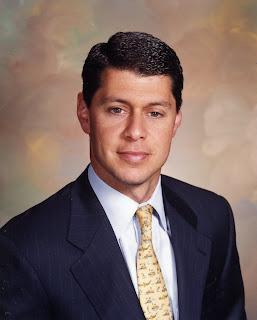
That's about it as we say adios to 2010. It’s been one of my favorite and most satisfying years since I entered the business in 1988. From the looks of the picture at the top of the page, I’ve heard the wisecracks over and over that it doesn’t look like I am old enough to drive or graduate college or run a business or have a family, etc. Yes, that photo is very old and one of my projects for early 2011 is to update it, graying hair, wrinkling skin and all!

In the stock market, we are dancing very close to the door as the worries and concerns I've had continue to mount. That's unlikely to change without a significant pullback or outright correction. Stocks have been grinding higher all month without so much as a .75% daily decline as Bernanke & Co.'s tsunami of liquidity sees no end. When the train stops, we are likely to see at least a sharp decline that wipes away much or all of the recent gains in short order. I'll have much, much more to say on this early in the New Year.

FYI, I will be on CNBC's The Call on Jan. 4 at 11:05 a.m. as well as on Squawk on the Street on Jan. 11 at 9:35 a.m.

Feel free to e-mail me with any questions or comments at Paul@investfortomorrow.com.


Until next time…

Paul Schatz

Heritage Capital LLC
http://www.investfortomorrow.com/
http://RetirementPlanningConnecticut.com/

Friday, December 24, 2010

Stop and Smell the Roses for a Change

(Editor's Note: Paul Schatz, President of Heritage Capital, LLC, in Woodbridge, will be contributing to Fi$callyFit every Friday. Read his biography here)

First and foremost, if you celebrate Christmas, I hope you have a truly wonderful holiday! For me, it's hard not to love the period from Thanksgiving through New Year's with so many fun holidays and the chance to spend quality time with family and friends. If only someone could invent a way to not add 10 pounds, I would be even happier!

Writing a financial newsletter and contributing to this blog can sometimes seem like one negative topic after another. Very few people really want to worry about their money or their future. They just want it to take care of itself. So with that said, it's time to look at some of the positives.

As a country, we are saving more. That may not be so great for the economy in the short-term, but it’s very healthy for Americans to have a rainy day fund. The real key to financial security both as individuals and as a nation is to have money in the bank that can be spent when needed not just the minute it is acquired. Once you outlive your money, you don’t have many favorable options left. Individuals have gotten the message. Local and state governments are being forced to face the same reality. Next up, hopefully, is the federal government.

Necessity truly is the mother of innovation. Difficult times in the past have resulted in new innovations, new businesses, new realities. Recessions have historically brought about a surge in true entrepreneurship and I eagerly await what is being conceived, researched and created.

Our environment is vastly improved from 30-40 years ago. It's hard to remember sometimes how very polluted our lakes, streams, air and grounds were just 30 years ago. In the United States, we have made tremendous changes in how we treat our environment and in doing so have set standards others throughout the world are striving to achieve. These changes have led to better technologies, cleaner energy and awareness of how small actions, good and bad, add up.

We are living longer, more active lives. Eighty is not quite the new 60, but the potential is there. Advances in health care have been astonishing over the past few decades and that needs to continue ahead. Laparoscopic, arthroscopic, non-invasive surgery is but a small example of how far we have come. From days and weeks in the hospital recuperating to hours, we keep getting better.

Life is actually much less expensive than it was 10, 20, or 30 years ago. The price of a loaf of bread may be more, but a transcontinental phone call, plane ticket, computer, telephone and many technology related conveniences are incredibly cheap in retrospect. I still remember buying my first computer in college, the Apple II E for more than $1000. Computing power must be thousands, if not millions of times faster for the same price or less. The variety of clothing and household items that surround us today would have had our great-grandparents in awe.

Information is among the greatest riches of our lives today. The libraries and references of the world are open to anyone with a computer and Internet access. This is such a completely transforming reality that it is hard to grasp. Can you remember thumbing through the newspaper for products on sale? I remember spending hours in the library using the Dewey Decimal System doing research for a term paper, not to mention the encyclopedia Britannica at home. It’s almost beyond my grasp to think about life without the Internet.

Thanks to technology, many people have the freedom and flexibility to work in the environment they choose. Investing is an excellent example of that. Thirty years ago, managing assets required access to information and people available only in the money centers - the New Yorks, Chicagos and other major cities. Today, some of the best money managers are located in what would have once been considered the most unlikely locations. Moving away from the "herd" I believe leads to new and better ways of managing assets and the growth of active management approaches.

Market-wise, the vast majority of sentiment indicators I follow are and have been flashing warning signs for some time, yet the market just thumbed its nose and continued moving higher during this seasonally positive period.

It's extremely rare not to see any weakness between Thanksgiving and now. It may be unprecedented, but I would have to research that. Yes, selling from corporate insiders remains extreme. Yes, the various sentiment surveys are all frothy. Yes, option traders are uniformly bullish. Yes, volatility has shrunk to low levels. Yes, yes, yes. There are lots of very worrisome signs.

But price, still the most important arbiter, refuses to give in. Why is that? Interestingly, the Federal Reserve's Permanent Open Market Operations (POMO), which I wrote about in Bernanke Manipulating the Markets, has been a buyer in the treasury market almost every single market day this month.

You know the old adage, "Don't Fight the Fed". Well, Ben Bernanke and his quantitative easing (QE) has certainly been a boon to the stock market with not a single significant down day in December. Bears have been beaten, bloodied and left for dead! Worth noting but by no means predictive, the Fed will NOT be in the market buying on the 23rd, 27th, 30th and 31st. The countdown to 2011 could have a few fireworks left!

Feel free to email me with any questions or comments at Paul@investfortomorrow.com.

Until next time…

Paul Schatz
Heritage Capital LLC
http://www.investfortomorrow.com/
http://RetirementPlanningConnecticut.com/

Friday, December 17, 2010

Bernanke on 60 Minutes… AGAIN

(Editor's Note: Paul Schatz, President of Heritage Capital, LLC, in Woodbridge, will be contributing to Fi$callyFit every Friday. Read his biography here)

For the second time in 18 months, Fed chairman Ben Bernanke appeared on CBS' 60 Minutes about two weeks ago. What a dramatic and impressive shift in Fed policy to have the most powerful central banker on earth sell his story to the world on network television. Or a cynic could say that things must be incredibly bad economically for Bernanke to degrade the hallowed institution of the Federal Reserve so much by having to subject himself to common media interviews.

Only time will tell which is true, but it gives me a good feeling that Bernanke is comfortable coming down from the ivory tower and sharing, something his predecessors would never have done. It's still unconscionable to me Alan Greenspan has the nerve to continually defend his actions as Fed chair.

Long time readers know that I have NEVER been a Greenspan fan, even during the booming economic times. After all, his first action upon taking office in 1987 was to immediately drain liquidity, greatly contributing to the stock market crash that year. While he is lauded for always providing liquidity and saving the world during the 9/11 tragedy, Long Term Capital debacle and Asian currency crisis, his reactive, not proactive behavior was symptomatic of the problem, not the solution!

Anyway, I found Bernanke's interview with 60 Minutes very interesting and informative. Although his choice of words were supposed to exude control and confidence, he seemed fidgety, nervous and a little uncomfortable, not the pillar of strength we are used to seeing combat Congress several times a year.

To be unfairly picky, it was hard not to notice that little twitch or lip quiver during the interview. So called body language experts have pointed out a lack of total conviction in his forecast and opinion. He often shook his head no when talking about a positive topic and this supposedly meant he really didn't believe what he was saying.

My takeaway just confirmed what I have believed since January 2008. Ben Bernanke and his supporters are, have been and will always be more concerned about deflation over inflation. He absolutely refuses to let another depression befall our economy.

As I continue to believe and have written here more times than I can count, if the Fed could engineer some real inflation with money velocity, wage growth and increased industrial capacity utilization along with higher consumer prices, it would truly be mission accomplished. As Bernanke hinted and I firmly believe, my 7-year-old daughter could combat inflation. It's just not that difficult! Deflation is the economic killer without a known cure.

Food and energy prices may have risen dramatically, which hurts consumers, but we don't have any wage growth. Capacity utilization remains elevated, but still at recession levels. There is lackluster money velocity from the banks as they continue to hoard cash at the Fed, not to mention the record levels of cash on corporate balance sheets. As I've said for three years, including DEFLATION: The REAL Boogeyman to Fear, there is no worrisome inflation now or in the foreseeable future.

Bernanke should be commended for doing his homework. His detractors point to over the horizon inflation with his appetite for creating money. But Bernanke was quick to point out that our supply of currency has not increased with quantitative easing. In fact, M1 (liquid currency) is actually declining year over year.

When the Fed "prints money" to buy treasury bonds, they are buying them from Uncle Sam to keep interest rates low, in hopes of spurring on economic growth. They do not desire to throw $100 bills from helicopters as Bernanke famously wrote about in a paper regarding cures for the Great Depressions. (Hence the name Helicopter Ben)


Feel free to email me with any questions or comments at Paul@investfortomorrow.com.

Until next time…


Paul Schatz


Heritage Capital LLC
http://www.investfortomorrow.com/
http://RetirementPlanningConnecticut.com/

Monday, December 6, 2010

My Take on Real Estate… Not the Forecast You Want

(Editor's Note: Paul Schatz, President of Heritage Capital, LLC, in Woodbridge, will be contributing to Fi$callyFit every Friday. Read his biography here)


Let’s pick up where I left off in Where Real Estate Is Headed… Part I. The survey I did from blog readers as well as my firm’s Street$marts subscribers yielded almost identical results; you are short-term (five years or less) negative on housing and long-term (10 years or more) positive. That’s pretty much as expected and probably similar to what folks would say around the country.

As you would also expect from reading my posts for a while, I usually disagree with the masses and do here as well. For the past 30 years, interest rates have been declining. So not only for new home buyers, but refinancers too, have only been able to make the correct decisions. Lock in a conventional 15 or 30 year mortgage and you only had to wait a short time to refinance and reduce payments or even withdraw equity. Use an adjustable rate mortgage and you were pretty much guaranteed to see your payments decline. The mortgage rate environment was simply the most favorable in the history of the market.

Why is that important? If the landscape continues to be that of lower and lower payments, demand for houses increases. And when demand increases, prices tend to rise too, until so much supply floods the market that the tide shifts in the other direction. The major tailwind (think jet flying with the wind) housing has seen since 1981 has just about died out, unless banks want to loan money without interest.

Almost as important, since the great experiment of using and living on more and more leverage (borrowing) has imploded, there’s simply not the access to capital there once was, even for good credit risks. Banks and other lenders have sharply tightened their lending standards and they are not going to make unlimited amounts of capital available like they did during the “Go Go” years.

To go one step further, we all know how important the Baby Boomers have been to the economy, financial markets and housing. Now that they are in or approaching retirement, a very large number of Boomers will downsize their lives. For many, their single biggest asset is their primary residence. Not only won’t this group be huge purchasers of real estate, they will likely be net sellers into a market where most of the 30 year tailwinds have dissipated or turned into headwinds.

In a nutshell, the longer-term prognosis for interest rates is stable at BEST, but rates will likely begin a 20 to 40 year period of rise sooner or later. Access to capital has been diminished and Baby Boomers have become net sellers. So overall, I find the former compelling case to own real estate pretty hard to swallow.

I am going to turn to the technical side with some charts and graphs. Below, you can see how new home sales have fared since the 1960s. Right now, they are back to levels usually seen at the end of recessions and right before they begin a new rising period. If this was a “normal” recovery, new home sales should be very strong in 2011 and 2012. I believe that the deleveraging process is going to trump this and 2011 will not be a bang up year, but I would love to be wrong here!


To support my point, look at chart below regarding the job market. I think it’s from Casey Research, but I cannot find the attribution. I did not create it. An important driver of real estate prices is the employment climate. Real estate super agent Judy Cooper sat with me for an hour and shared her thoughts from decades of experience. From a local level, she thought that some of the major macro trends could and have been overcome by a strong jobs market, which makes sense. The problem is that non Fairfield County Connecticut hasn’t seen a truly good employment scene in a very, very long time. We are one of the few states where people continue to leave and the business environment is and has been somewhat hostile towards corporations.


The chart below shows the massive job losses during the crisis and sharp comeback earlier this year with the government’s tsunami of programs and money into the system. But the past four months haven’t been encouraging. If this was truly a “normal” recovery from a recession, the jobs market should turn much stronger almost immediately. While I would love to see, I am certainly not planning on it, especially in non Fairfield County Connecticut.


To overwhelm you a little more, below is another great illustration, courtesy of economist supreme David Rosenberg, formerly of Merrill Lynch and now of Gluskin Sheff in Toronto.  This shows the number of residential vacancies in raw numbers as well as in percentage terms.  While it’s horrifically ugly to look at, the rate of ascent is clearly unsustainable and should begin to rollover shortly.  That’s the good news.  The bad news is that it’s going to take years and years to soak up all of the excess inventory.  Organic population growth will certainly help, but this is not solved overnight. 


While Americans are typically optimistic long-term, and rightfully so given our history, I think it’s premature on the real estate front with so many factors working against. I think the best case scenario is for stability over the next 10 years, meaning -5% to + 10%., but I repeat; I would LOVE to be proven wrong!

FYI, I will be on CNBC’s The Call at 11:05am on Wednesday, November 24.


Feel free to email me with any questions or comments at Paul@investfortomorrow.com.


Until next time…

Paul Schatz

Heritage Capital LLC
http://www.investfortomorrow.com/
http://RetirementPlanningConnecticut.com/

Wednesday, November 17, 2010

IRS holding $1.53 million in undelivered refund checks to CT taxpayers

The Internal Revenue Service is looking for 1,013 Connecticut taxpayers who have not yet claimed their share of undelivered refund checks totaling $1.53 million.

These undelivered refund checks were returned to the IRS by the U.S. Postal Service due to mailing address errors. The IRS can reissue the checks, which average $1,517, after taxpayers correct or update their addresses with the IRS.


Nationally, there are 111,893 taxpayers with undelivered refunds, totaling $164.6 million with an average refund of $1,471.

“We want to make sure taxpayers get the money owed to them,” IRS Commissioner Doug Shulman said in a statement.  “If you think you are missing a refund, the sooner you update your address information, the quicker you can get your money.”

Gregg Semanick, the IRS Connecticut spokesperson, said taxpayers only need to update the information once for the IRS to send out all checks that are due.  “Some taxpayers are due more than one check,” Semanick said.

Nationwide, undelivered refund checks average $1,471 this year, compared to $1,148 last year. The average dollar amount for returned refunds rose by 28 percent this year, possibly due to recent changes in tax law which introduced new credits or expanded existing credits, such as the Earned Income Tax Credit.

Taxpayers can generally update their addresses with the online “Where’s My Refund?” tool, where they also can check the status of refunds.

A taxpayer must submit his or her Social Security number, filing status and amount of refund shown on their 2009 return.
Those checking on a refund over the phone will receive instructions on how to update their addresses. Taxpayers can access a telephone version of “Where’s My Refund?” by calling 1-800-829-1954.

While only a small percentage of checks mailed out by the IRS are returned as undelivered, taxpayers can put an end to lost, stolen or undelivered checks by choosing direct deposit when they file either paper or electronic returns. Taxpayers can receive refunds directly into their bank, split a tax refund into two or three financial accounts or even buy a savings bond.

Friday, November 12, 2010

If It's Obvious... It's Obviously Wrong

(Editor's Note: Paul Schatz, President of Heritage Capital, LLC, in Woodbridge, will be contributing to Fi$callyFit every Friday. Read his biography here)

In my Special Election Update, I discussed the three big events for the markets last week, the election, Fed announcement and jobs report. The market's reaction to the election could not have been more expected. As I mentioned, a Republican takeover of the House with at least 60 seats and headway in the Senate was fully baked in the cake. That's why stocks did almost nothing the next day.

Bernanke & Company also gave the markets exactly what they were looking for with another round of quantitative easing to the tune of $600B (whether that’s good medicine is a topic for a different piece). Say what you want about this Fed, but they have done an excellent job of telegraphing their moves well in advance and making sure not to disappoint the markets. In typical Fed day fashion, stocks were quiet in the morning and saw a brief surge in volatility before modestly rallying into the close.

The surprise of the week came on "no news" Thursday when most of the major markets surged higher with the Dow, S&P 500, S&P Mid Cap, Nasdaq and Dow Transports all scoring breakouts to new 2010 highs. Only the lonely Russell 2000 index of small caps remains below its April high.


Since mid October, I've been concerned that the rally from where we committed so much money at the July bottom was getting a bit ahead of itself.  Not so much where we would pull the ripcord, but enough that should warrant a short-term pullback to digest those gains.  With so many bears becoming bulls, a surge in call buying by option traders and sentiment surveys showing a bit too much excitement, taking some chips off the table seemed like a good plan.


So far, the market hasn't cared. After last week's price action and heavy news flow, it's pretty hard to find many folks negative on the stock market with most of the major indices at new 2010 highs and the Fed committed to pumping another $600B into the markets. If their first round of QE with $1.25T was any indication, the old adage of "don't fight the Fed" should be wise to follow.

But the skeptic in me still worries. It's getting too easy. No one is worried anymore. Just buy stocks, commodities and high yield bonds. Sell the dollar and treasuries. It's a layup! History (and Joe Granville) has taught me when it's obvious... it's obviously wrong.

That's why I started pounding the table to buy the dollar last week. There are NO bulls left. Everyone is bullish on the Euro and bearish the greenback. That's the exact opposite of what we saw in late May when I offered on CNBC that the Euro was so bad, it was actually good. You had to just hold your nose, close your eyes and buy it.

Everyone seems to be embracing this new world financial order. Quantitative easing is supposed to help the economy by flooding the system with more and more money, which in turn lowers interest rates and helps banks, corporations and consumers.

I don't know about you, but besides helping fuel the financial markets, I don't see the positive economic effects that QE is intended. Money in the system isn't the problem. Banks have more than a trillion dollars sitting at the Fed earning peanuts, while corporations are also sitting on more than a trillion in cash, unwilling to spend and invest.

Summing it all up, although the major stock indices, sectors and high yield bonds have all broken out to new 2010 highs and everyone is partying like it's 1999, I am not willing to imbibe any more beverages. We have plenty on the table, but less than the maximum we had during July, August, September and half of October.

The most bullish thing stocks could do right now would be a sideways digestion for at least a week to wind up for another move higher. I think it would be constructive to see an orderly pullback of 2-4%. Much more than that would indicate that the recent breakout was false and sharply lower prices could ensue. As I mentioned last week, I would be very surprised to see stock breakout and explode higher without a pause. I think that would be dangerous and perhaps even a terminal move.

Feel free to email me with any questions or comments at Paul@investfortomorrow.com.


Until next time…

Paul Schatz

Heritage Capital LLC
http://www.investfortomorrow.com/
http://RetirementPlanningConnecticut.com/

Thursday, November 4, 2010

Post-Election Wrap-up...STILL Great to be an American!

(Editor's Note: Paul Schatz, President of Heritage Capital, LLC, in Woodbridge, will be contributing to Fi$callyFit every Friday. Read his biography here)
It’s a great day to be an American! Although that’s true every day, it’s especially true after election day. Far too many people take for granted what our forefathers fought and died for to make this possible. Just think what goes on around the world. Citizens of emerging democracies stand in lines for hours and hours, risking being intimidated, beaten and even killed to cast one single vote in what may end up being a rigged process.

It seems like our country has increased its level of fickleness when it comes to the big elections. 2008 was a resounding and embarrassing defeat for Republicans that was supposed shake the party to the core. Only two years later, the red states completely thumped the blue, the likes of which hasn’t been seen since the 1930s. Now, this is supposed to be a shot across the bow to Democrats to wake up or 2012 is going to be ugly.

I watch and read an awful lot of market and political pundits and no one has been able to get to the root of the dramatic change. I understand all about Iraq and the economy and jobs and deficits and spending, but there’s some hot topic every election. Americans seem to want instant solutions to problems more so than at any other time. Maybe it’s the tsunami and speed of all the information we’re exposed to? I really don’t know.

Getting back to the election and the markets, we now have a split Congress, something that’s not exactly typical in this country. As you can see from the chart below thanks to dshort.com, there is not much history to use in order to guide us on what the markets usually do in this case. They performed well in the 1980s, poorly in the 1930s and fair in the 1910s. I have heard many people confuse a split Congress with an overall split of the President on one side and Congress on the other. That worked very well for the markets under Reagan, Bush I and Clinton, but not so great in 2008.


On election night, America spoke loud and clear. People hated what George Bush did and now they hate what Barack Obama is doing. For the work that I do, the only things that matter are what was the market expecting and how did it react. Just before the election, I had this to say in my Street$marts newsletter.

“With the stock market just completing 10 good weeks, certain things are now baked in the cake. Check out Intrade.com for a few examples. Republicans are poised to win at least 60 seats in the House, unseating Nancy Pelosi et al. I'd like to be a fly on the wall when she hands over the gavel to John Boehner. Are they civil to each other? Does she smash him over the head with it? What wisecrack comment does he let slip?

In the Senate, it's expected that the Republicans gain major seats, but do not gain control. It's hard to believe that Harry Reid could actually lose his seat, but there is precedent in the House with Tom Foley (I think) and not in the Senate. Anyway, that's what the stock market is expecting.

If we see Linda McMahon in CT come from behind to win the Senate seat or Barney Frank lose his seat in MA, something much bigger will occur. Conversely, if Harry Reid retains his seat and a few of the "locked" Republican seats don't turn out that way, Barack Obama may get an early boost in his reelection bid. I think the bottom line is that the higher the turnout, the more it favors the Republicans.

Turning to stocks, the few days before and after the election are usually positive. We've seen a very strong rally and a "sell the news" mentality would not be the least bit surprising, whether it's right away or a few days later. On the other hand, I would be surprised if stocks launched higher after the election and did not come back to earth soon thereafter.

Let's turn to more "ifs". If the Republicans' expectations end up being a lot of hot air, I would put my hard hat on as stocks should see some nasty downside in the coming weeks. Taxes would surely increase next year along with more regulation and government spending. As of now, if Congress does not act, Americans will be punished with the largest tax increase in the history of our country.

If Republicans somehow take control of the Senate, the most unlikely of all scenarios, the odds favor a strong surge higher. But I would expect whatever initial move to be quickly reversed over a the following few weeks. The overall market theme based on the election is that volatility should increase greatly, at least over the short-term.

Besides the election on Tuesday, we also have Ben Bernanke's shindig with the FOMC on Wednesday. While no one on earth expects Ben to touch rates, the markets have been waiting on the edge of their seats for the final announcement of QE2 (running the printing presses 24/7). Although initial expectations were for another trillion to be created by purchasing more treasury bonds over a period of months, that has been tempered to at least $500B.

As a side note, it's pretty amazing that we use the word "only" and five hundred billion in the same sentence. And so cavalierly throw around the word "trillion". Like they're nothing! It almost feels like we've accepted all this nonsense matter of factly.

So on Wednesday morning, we'll get immediate market reaction to the election and then the Fed's news at 2pm. And let's not forget the employment report being released Friday at 8:30am. If stocks somehow hold up this week and rally into and on that news, I imagine that will spark a key reversal to the downside, giving back whatever gains were made during the week in short order. On the treasury bond side, given their weakness coming in to this week, I would expect (as with stocks) a significant increase in volatility, but a rally as stocks pullback.”

As expected, the markets had a very muted response to the election as there were no real surprises. Later that afternoon, also as expected, the Fed announced their second round of Quantitative Easing (QE2) where they are going to create $600B to purchase treasury bonds of varying maturities over the next 6-8 months. After an hour of volatility, stocks chugged higher but bonds sold off hard as Bernanke’s plan didn’t include as many long dated bonds as expected. No huge deal…

And as I type this, stocks are soaring; gold I soaring; oil is soaring; bonds are soaring; and everyone is parting like it’s 1999! By the time this posts, the October employment report will have been released at 8:30am. Given the rally over the past week, etc., I would imagine it comes in better than expected and stocks open up strongly. If that’s the case, all major indices will be trading at new 2010 highs, along with many sectors.

How much better could it get?

Based on history, if that scenario unfolds, I would expect a downside reversal to begin to take shape within a day or two. I didn’t believe stocks would explode higher without pulling back before this week and I still don’t. A really good jobs report should create some exuberance and that usually spells at least short-term trouble for the markets.

FYI, I will be on CNBC’s The Call today (11/5) at 11:05am, analyzing today’s employment report and again on CNBC’s Squawk on the Street next Tuesday (11/9) at 9:35am discussing the markets’ next move.

Feel free to email me with any questions or comments at Paul@investfortomorrow.com.


Until next time…

Paul Schatz

Heritage Capital LLC
http://www.investfortomorrow.com/
http://RetirementPlanningConnecticut.com/